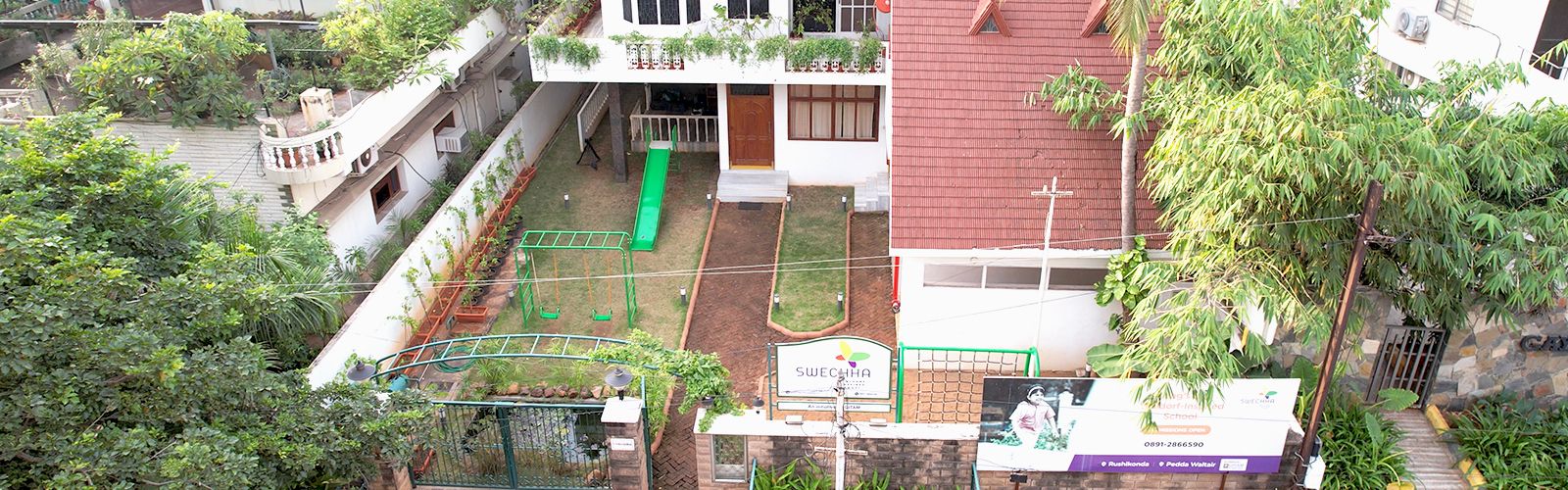
Best Kindergarten School in Pedda Waltair
Branch location - Pedda Waltair
- 8-4-4, Nauka Nagar, Pedda Waltair, Visakhapatnam - 530017, Andhra Pradesh, INDIA.
Get in Touch
Swechha - A Nurturing Space for Early Learning
At Swechha Waldorf-Inspired School, we redefine early education by blending play, creativity, and structured learning. Recognized as one of the Best kindergartens in Pedda Waltair, we prioritize hands-on experiences, storytelling, and nature-inspired learning to ensure a joyful and meaningful childhood. If you’re looking for Kindergarten schools or pre schools in Pedda Waltair, Swechha is the perfect place to begin your child’s academic journey.
What Makes Swechha the Best Kindergarten School in Pedda Waltair?
- An approach that respects a child’s natural growth
- A focus on hands-on experiences rather than rote learning
- Warm and gentle classrooms designed for exploration
- Small class sizes ensuring individual attention
- A nurturing environment for early-stage education in Visakhapatnam
Branch Highlights – Pedda Waltair
- Location : Next to Gayatri Towers, near Visakha Eye Hospital, Pedda Waltair
- Programs : Pre-school to Kindergarten
- Campus : A thoughtfully designed space fostering imagination
- Faculty : Passionate educators trained in Waldorf methodologies
- Activities : Baking, storytelling, arts, music, and outdoor learning
FAQ's
Waldorf education, established by Rudolf Steiner and Emil Molt in 1919, has its foundations in Anthroposophy. At the heart of Anthroposophy is the belief that humanity has the wisdom to transform itself and the world, through one’s own spiritual development. To that end, Waldorf education holds as its primary intention the ideal of bringing forth—in every child—his or her unique potential in a way that serves the further development of humanity. The curriculum, pedagogy, and teaching methods are designed to nurture this potential.
These two educational approaches began with a similar goal to design a curriculum that was developmentally appropriate to the child and that addressed the children’s need to learn in a tactile as well as an intellectual way. The philosophies are otherwise very different.
A typical Waldorf Kindergarten classroom has 25 children of mixed ages between 3 - 5 years with one class teacher and one co-teacher.
In a Waldorf Kindergarten, children are not taught the letters of the alphabet nor do they practice reading from books or writing. Language skills are built through the repetition of stories, songs and verses. Children develop precocious verbal abilities of impressive vocabulary and a number of poems and stories that they can recite by heart. In addition to this, through activities such as drawing, finger knitting and sewing a child’s fine motor skills are enhanced in preparation for grade one when writing is formally introduced.
Assessment in Waldorf education is not driven by grades or scores. A full assessment of each student’s progress is provided in the form of a year-end narrative.
Receive the child with reverence. Educate them in love. Send them forth in freedom.
Strict adherence to COVID guidelines
With due regards to health and safety of children, we plan to choose between two alternate modes of learning based on the circumstances.
About Swechha

Swechha, originating from “swa ichha” represents freedom of one’s will. We believe a safe, warm and loving environment nourishes a child’s spirit enabling them to experience true freedom as they grow into adulthood.
Admissions process
We invite and encourage parents and guardians to register for our orientation sessions to know more about Waldorf philosophy. Our Kindergarten will have mixed age classrooms consisting of students of Nursery, Junior Kindergarten and Senior Kindergarten. Children above 3 years and below 6 years of age as on 31st May, 2021 are eligible for admissions in the year 2021-22.
Waldorf education
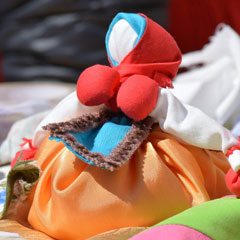 Child-centered
 Holistic
 Developmentally appropriate
Smarty Programs

Toddler (1,5 – 2 years)
By creating a safe, consistent and welcoming environment, we help

Preschool (2 – 3 years)
By creating a safe, consistent and welcoming environment, we help

Kindergarten (3 – 4 years)
By creating a safe, consistent and welcoming environment, we help

Pre-K Program (4 – 5 years)
By creating a safe, consistent and welcoming environment, we help

Before/After School (6 years)
By creating a safe, consistent and welcoming environment, we help

Outdoor Play Time
By creating a safe, consistent and welcoming environment, we help